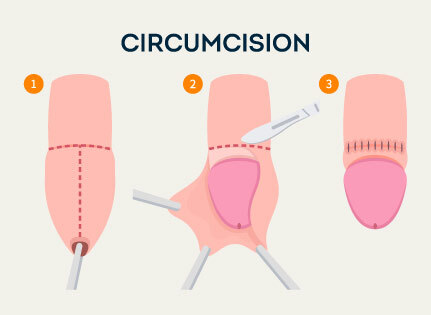

Circumcision is the surgical removal of the part of the foreskin over the head of the penis. Laser-based circumcision is way more effective and successful as compared to the traditional procedures. The foreskin is removed with a laser that ablates th Book an appointment with the best piles surgeons in Chennai.


Free Pickup

No-Cost EMI

Support in Insurance Claim

1-day Hospitalization


ARUL RADHAKRISHNAN
“best experience at pristyn care ”
 Date: 06-11-24
Ebenezer P
“good”
Date: 24-10-24

wilson
“Good prolite patience Over 👍👍”
Date: 24-03-25
ARUL RADHAKRISHNAN
“best experience at pristyn care ”
Date: 06-11-24
Ebenezer P
“good”
Date: 24-10-24
wilson
“Good prolite patience Over 👍👍”
Date: 24-03-25
Circumcision is a widely practiced procedure with modest medical benefits: lower infection rates, improved hygiene, and reduced STI risks. While generally safe, there are minor risks that increase with age. Beyond health, the decision is often influenced by cultural, religious, and personal beliefs. For newborns, it’s relatively straightforward with quick recovery; for older boys or adults, it requires more careful planning and longer healing.
Diagnosis of phimosis begins with a simple, routine physical examination. Your urologist may ask questions about your medical history, symptoms, sexual activity, and any injury to the penis. The doctor may also examine the penis for signs of infection, tight foreskin and related symptoms of phimosis.
The first thing that the urologist will do is ask about your symptoms and physically diagnose the condition. The urologist will try nonsurgical treatments to reduce the foreskin swelling such as pressing the penis with a hand or wrapping the penis in a tight bandage. After the swelling has been reduced, your urologist should be able to pull the foreskin back to its regular position. If the foreskin remains stuck there, the urologist might need to perform a circumcision to treat phimosis.
Medical Recommendations
Organizations such as the AAP and CDC acknowledge modest health benefits, particularly in reducing UTIs and STIs, but do not recommend universal newborn circumcision—the decision rests with parents
WHO includes male circumcision as part of HIV prevention strategies in high-risk populations
Transform your health, transform your life. With Neuhealth Care, experience personalized medical travel that combines expert care, seamless planning, and unparalleled support – for a journey thats nothing short of life-changing.
No.A4, Chandrasekaran Avenue, 1st Main Road, Thoraipakkam, Chennai 600097
+91 842-842-2526
enquiries@neuhealthcare.in
© NeuHealthcare.in. All Rights Reserved by NeuHealth Care.
Designed by NeuHealth Care
 Chennai
 Hyderabad
 Bengaluru
 Mumbai
 Pune
Pune
 Delhi NCR
 English
 తెలుగు
 தமிழ்
தமிழ் ಕನ್ನಡ
ಕನ್ನಡ বাংলা
বাংলা मराठी
मराठी हिन्दी
 21 Years Experience