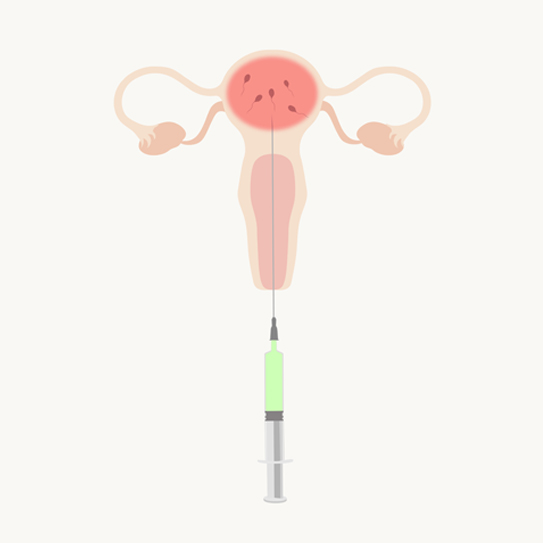

The IUI procedure is considered one of the most effective and reliable infertility treatments available presently, which is also less invasive than its counterparts, such as In Vitro Fertilization or IVF. Book an appointment with the best piles surgeons in Chennai.


Free Pickup

No-Cost EMI

Support in Insurance Claim

1-day Hospitalization


ARUL RADHAKRISHNAN
“best experience at pristyn care ”
 Date: 06-11-24
Ebenezer P
“good”
Date: 24-10-24

wilson
“Good prolite patience Over 👍👍”
Date: 24-03-25
ARUL RADHAKRISHNAN
“best experience at pristyn care ”
Date: 06-11-24
Ebenezer P
“good”
Date: 24-10-24
wilson
“Good prolite patience Over 👍👍”
Date: 24-03-25
Infertility issues impact several individuals and couples each year, making it difficult for them to live their dream of experiencing parenthood. Several treatments are now available for couples and individuals who wish to conceive, out of which Intrauterine Insemination (IUI) is considered a popular and reliable solution. This infertility treatment involves a direct transfer of sperm into the female partner’s uterus. When a couple tries to conceive through intercourse, only a few sperm actually reach the egg. The number of sperm that will reach the egg depends on several factors, including the reproductive health of both the male and the female partner. Therefore, in an IUI procedure, fertility specialists derive some healthy sperm and directly place them into the uterus to facilitate fertilization. This simplifies the process and helps couples and individuals have biological children.
Depending upon the cause of infertility , the success rate of IUI treatment can be anywhere between 14 to 21 percent per cycle. The rate of multiple gestation pregnancies is 23-30% when fertility drugs are used. The success rate of IUI highly depends upon the age of the female and the quality of the sperm used.
Before starting IUI, a thorough diagnostic workup is essential:
Medical & Fertility History: Review health histories, reproductive efforts, and prior fertility treatments
Hormone Tests: FSH, estradiol, LH, AMH for ovarian reserve; TSH, prolactin for overall hormone health.
Ultrasound: Pelvic scan to assess uterine and ovarian structure, follicle count
Tubal Patency Test: Hysterosalpingogram (HSG) or saline sonogram to confirm open fallopian tubes
Semen Analysis: Measures sperm count, motility, morphology per WHO standards If initial results are suboptimal, typically two more tests are done to confirm.
Additional Tests: Influenced by findings—e.g., sperm DNA fragmentation, clotting profiles—for couples with unexplained infertility
This evaluation verifies that you’re a suitable candidate for IUI and guides the treatment plan.
Proper timing is critical for IUI success:
Natural-cycle IUI: Uses your natural ovulation.
Medicated‑cycle IUI: Clomiphene or Letrozole for oral stimulation, or injectable gonadotropins (FSH, LH), as needed
Monitoring: Repeated ultrasounds and blood hormone tests track follicle growth, endometrial lining, and estrogen levels
Ovulation Trigger: Administered (usually hCG) when follicles mature, with insemination scheduled 24–36 hours later
On IUI day:
Sample Collection: Partner provides semen or donor sperm is thawed.
Sperm “washing”: Removes debris and concentrates motile sperm for higher fertilization potential
Done in-clinic under ultrasound guidance.
Procedure steps:
Lie in stirrups; small speculum inserted.
A soft catheter guides processed sperm through the cervix into the uterus
The entire process takes ~5–15 minutes and is minimally discomforting (mild cramping)
A brief rest afterward (lie flat for a few minutes), then normal activity resumes.
You may experience slight spotting or cramping; infection risk is low
2‑Week Wait: After ~14 days, a blood or urine pregnancy test is done
Next Steps:
If positive → proceed with early pregnancy monitoring.
If negative → your doctor may plan additional IUI cycles (usually up to 3–6) or consider IVF for persistent cases or specific conditions
Transform your health, transform your life. With Neuhealth Care, experience personalized medical travel that combines expert care, seamless planning, and unparalleled support – for a journey thats nothing short of life-changing.
No.A4, Chandrasekaran Avenue, 1st Main Road, Thoraipakkam, Chennai 600097
+91 842-842-2526
enquiries@neuhealthcare.in
© NeuHealthcare.in. All Rights Reserved by NeuHealth Care.
Designed by NeuHealth Care
 Chennai
 Hyderabad
 Bengaluru
 Mumbai
 Pune
Pune
 Delhi NCR
 English
 తెలుగు
 தமிழ்
தமிழ் ಕನ್ನಡ
ಕನ್ನಡ বাংলা
বাংলা मराठी
मराठी हिन्दी
 21 Years Experience