
No.A4, Chandrasekaran Avenue, 1st Main Road, Thoraipakkam, Chennai 600097 Mon-Sun 09am - 5pm
4.5 golden star
Ratings
3 Million+
Happy Patients
200+
Hospitals
30+
Cities
USFDA-Approved Procedure

Free Pickup

Support in Insurance Claim

No-Cost EMI

No-Cost EMI

Support in Insurance Claim

1-day Hospitalization
1-day Hospitalization

Best Doctors for Piles Treatment in Chennai

doctor-image
Dr. M. Senthil Kumar

MBBS, MS - General Surgery

medikit icon 21 Years Experience

  4.9/5   Available

  No 16 & 50, Block Z, River View Colony, Chennai

Proctology Urology Vascular
Dr. M. Senthil Kumar is an expert and experienced General Surgeon, Proctologist, and Laparoscopic Surgeon with an experience of 18 years, and specialzies in Urology, Proctology, Laparoscopy, and Vascular. He graduated and obtained his MBBS degree from PSGIMR Coimbatore in 2004, and then his postgraduate MS degree from PSGIMR Coimbatore in 2014.Currently, he is practicing at Pristyn Care Clinic in Chennai. He is fluent in English,Hindi and provides compassionate care for all his patients to ensure complete recovery. He has been commended by his patients for his caring nature, hard working attitude, and willingness to be there for them - any time of day and night.He provides treatment for the following - Piles, Fissure, Fistula, Abscess,Pilonidal Sinus, Anal Polyps, Anal Warts, Rectal Prolapse, Toenail, Vascular, Varicose Veins,Thrombosis, Dvt, Diabetic Foot Ulcer, Foot Ulcer, Varicocele, Umbilical Hernia, Inguinal Hernia, Incisional Hernia, Hiatus, Gallstones, Stent Removal, Cyst Removal, Hydrocele, Urethral Stricture, Erectile Dysfunction, Urinary Tract Infection, Urinary Incontinence, Balnitis, Phimosis, Paraphimosis. He is registered in the Indian Medical Registry with the license number 74123. He strives to provide advanced medical care in a comfortable and holistic environment for all patients coming to him for treatment.
Read more

ARUL RADHAKRISHNAN

“best experience at pristyn care ”

calender icon   Date: 06-11-24

Ebenezer P

“good”

calender icon   Date: 24-10-24

doctor-image
Dr. Prabhakar Padmanabhan

MBBS, MS - General Surgery

medikit icon 15 Years Experience

  5.0/5

Proctology Urology Laparoscopy
Dr. Prabhakar Padmanabhan is an expert and experienced General Surgeon with over 14 years of experience. He completed his MBBS from Kursk State Medical University, Russia, in 2010, followed by an MS in General Surgery from Meenakshi University, Kanchipuram, in 2015. He further enhanced his expertise by obtaining a Fellowship in Minimal Access Surgery (FMAS) from the World Laparoscopic Hospital, Delhi, in 2016, and a Fellowship in Gastrointestinal Endo Surgery (FIAGES) in 2019. He is registered with the Tamil Nadu Medical Council. Throughout his career, Dr. Padmanabhan has held several significant positions. He served as an Assistant Professor at Meenakshi Medical College, Kanchipuram, from 2015 to 2016, where he delivered lectures and practical training in general surgery to medical students and assisted in surgical operations, focusing on skill development and the application of minimal access surgery. Since 2016, he has been a Senior Assistant Professor in the Department of General Surgery at Rajiv Gandhi Government General Hospital, Chennai. In this role, he leads and teaches advanced surgical techniques and methodologies to medical students and residents, conducts and supervises complex surgical procedures with a focus on laparoscopic and minimally invasive techniques, and contributes to departmental research and clinical trials to advance surgical practices and patient care. Dr. Padmanabhan is proficient in a wide range of surgical procedures, including advanced laparoscopic surgery, minimal access surgery, gastrointestinal endo surgery, and laser proctology. He has been recognized for his contributions to surgical education and training, as well as his involvement in clinical research and trials. Known for his dedication to patient care, Dr. Padmanabhan strives to provide advanced medical services in a compassionate and holistic environment.
Read more

wilson

“Good prolite patience Over 👍👍”

calender icon   Date: 24-03-25

doctor-image
Dr. M. Senthil Kumar

MBBS, MS - General Surgery

medikit icon 21 Years Experience

  4.9/5

Proctology Urology Vascular
Dr. M. Senthil Kumar is an expert and experienced General Surgeon, Proctologist, and Laparoscopic Surgeon with an experience of 18 years, and specialzies in Urology, Proctology, Laparoscopy, and Vascular. He graduated and obtained his MBBS degree from PSGIMR Coimbatore in 2004, and then his postgraduate MS degree from PSGIMR Coimbatore in 2014.Currently, he is practicing at Pristyn Care Clinic in Chennai. He is fluent in English,Hindi and provides compassionate care for all his patients to ensure complete recovery. He has been commended by his patients for his caring nature, hard working attitude, and willingness to be there for them - any time of day and night.He provides treatment for the following - Piles, Fissure, Fistula, Abscess,Pilonidal Sinus, Anal Polyps, Anal Warts, Rectal Prolapse, Toenail, Vascular, Varicose Veins,Thrombosis, Dvt, Diabetic Foot Ulcer, Foot Ulcer, Varicocele, Umbilical Hernia, Inguinal Hernia, Incisional Hernia, Hiatus, Gallstones, Stent Removal, Cyst Removal, Hydrocele, Urethral Stricture, Erectile Dysfunction, Urinary Tract Infection, Urinary Incontinence, Balnitis, Phimosis, Paraphimosis. He is registered in the Indian Medical Registry with the license number 74123. He strives to provide advanced medical care in a comfortable and holistic environment for all patients coming to him for treatment.
Read more

ARUL RADHAKRISHNAN

“best experience at pristyn care ”

calender icon   Date: 06-11-24

Ebenezer P

“good”

calender icon   Date: 24-10-24

doctor-image
Dr. Prabhakar Padmanabhan

MBBS, MS - General Surgery

medikit icon 15 Years Experience

  5.0/5

Proctology Urology Laparoscopy
Dr. Prabhakar Padmanabhan is an expert and experienced General Surgeon with over 14 years of experience. He completed his MBBS from Kursk State Medical University, Russia, in 2010, followed by an MS in General Surgery from Meenakshi University, Kanchipuram, in 2015. He further enhanced his expertise by obtaining a Fellowship in Minimal Access Surgery (FMAS) from the World Laparoscopic Hospital, Delhi, in 2016, and a Fellowship in Gastrointestinal Endo Surgery (FIAGES) in 2019. He is registered with the Tamil Nadu Medical Council. Throughout his career, Dr. Padmanabhan has held several significant positions. He served as an Assistant Professor at Meenakshi Medical College, Kanchipuram, from 2015 to 2016, where he delivered lectures and practical training in general surgery to medical students and assisted in surgical operations, focusing on skill development and the application of minimal access surgery. Since 2016, he has been a Senior Assistant Professor in the Department of General Surgery at Rajiv Gandhi Government General Hospital, Chennai. In this role, he leads and teaches advanced surgical techniques and methodologies to medical students and residents, conducts and supervises complex surgical procedures with a focus on laparoscopic and minimally invasive techniques, and contributes to departmental research and clinical trials to advance surgical practices and patient care. Dr. Padmanabhan is proficient in a wide range of surgical procedures, including advanced laparoscopic surgery, minimal access surgery, gastrointestinal endo surgery, and laser proctology. He has been recognized for his contributions to surgical education and training, as well as his involvement in clinical research and trials. Known for his dedication to patient care, Dr. Padmanabhan strives to provide advanced medical services in a compassionate and holistic environment.
Read more

wilson

“Good prolite patience Over 👍👍”

calender icon   Date: 24-03-25

What is Ingrown Toenail Removal ?

Ingrown toenail removal is also known as matricectomy or matrixectomy. It is the procedure in which the nail matrix (the tissue at the base of the nail where the nail cells originate) is removed partially or completely. The surgery is generally recommended to treat chronic ingrown toenails when other conservative and non-surgical treatments fail. 

Matricectomy can be performed using different techniques, including chemical, electrosurgical, or surgical. The most suitable technique is chosen by the doctor after examining the patient and determining the severity of the condition. To learn more about the treatment procedure, you can contact Pristyn Care. 

What Happens If Ingrown Toenail is Not Removed?

If left untreated, an ingrown toenail can get worse and cause various complications, including:

  • Infection: The skin around the ingrown toenail can become infected, leading to pain, redness, swelling, and pus. The infection can spread to other parts of the foot and even the leg if left untreated, leading to a more serious condition called cellulitis.
  • Chronic Pain: Ingrown toenails often cause chronic pain and discomfort, making it difficult to walk or wear shoes comfortably.
  • Nail Deformity: In some cases, chronic ingrown toenails can cause the nail to grow abnormally or even fall off, leading to a permanent nail deformity.
  • Worsening of Underlying Conditions: People with underlying conditions like diabetes or peripheral artery disease are at higher risk of complications from ingrown toenails, such as foot ulcers or gangrene. 

It is essential to seek medical attention at the earliest as soon as an individual notices the symptoms of an ingrown toenail. Early treatment can prevent serious complications and ensure that the condition doesn’t get worse.

Overview

Ingrown Toenail Treatment Methods
  • Soaking the Foot: Soaking the affected foot in warm water for 15 to 20 minutes, two to three times a day, can help reduce pain and swelling. Adding Epsom salt or other disinfectants to the water can also help to prevent infection.
  • Lifting the Nail: The doctor may use a cotton swab or dental floss to lift the edge of the ingrown toenail and place a small piece of cotton or dental floss under the nail. This can help the nail grow above the skin and relieve the pressure.
  • Antibiotics: If there is an infection present, the doctor may prescribe antibiotics to help fight the infection.
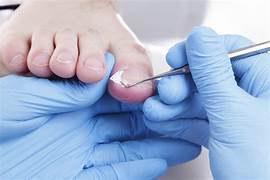
  • Partial Nail Removal: In more severe cases, the doctor may need to remove the part of the nail that is digging into the skin. This is a minor surgical procedure that can be done under local anesthesia.
  • Total Nail Removal: In extreme cases where the ingrown toenail is recurrent or very severe, the entire nail may need to be removed. This procedure is also done under local anesthesia and is usually reserved for chronic or severe cases.
How is Ingrown Toenail Surgery Performed?
  • The patient is given local anesthesia to numb the toe and reduce pain during the procedure.
  • The surgeon will then use a scalpel and specialized nail nippers to remove the affected portion of the toenail. In some cases, the entire toenail may need to be removed.
  • If matricectomy is being performed, the surgeon may use chemical (phenol), surgical, laser, or radiofrequency techniques to remove the affected nail matrix safely. 
  • Once the nail is removed, the surgeon will clean and treat the nail bed to prevent infection.
  • A sterile dressing is then applied to the toe to protect the nail bed and promote healing.
Techniques Used for Ingrown Toenail Surgery
  • Partial Nail Avulsion: It is the most common technique used for ingrown toenail removal. This technique involves removing the edge or corner of the toenail that is digging into the skin and the nail bed underneath it. The remaining part of the nail is left intact.
  • Total Nail Avulsion: This technique involves removing the entire toenail, including the nail bed underneath it. It is usually reserved for severe cases of ingrown toenails or cases where the condition is recurrent.
  • Chemical Matricectomy: In this technique, a chemical, mostly phenol, is used to destroy the nail matrix (the tissue that produces the nail) in the affected area. Phenol is a caustic agent that destroys the matrix cells and prevents the nail from growing back in the exact location. 
  • Laser Surgery: Laser surgery can remove the ingrown toenail and cauterize the tissue to prevent regrowth. The laser energy destroys the tissue and seals blood vessels, reducing bleeding and post-operative pain. This technique is not commonly used and is typically reserved for more severe cases.
  • Radiofrequency Ablation: This technique uses a special device that delivers a high-frequency electrical current to the affected area, which destroys the tissue and prevents the ingrown toenail from growing back.
Risks & Complications of Toenail Removal Surgery
  • Infection: It is the most common risk of surgical procedures. If the patient fails to keep the wound clean and dry, there will be a higher risk of infection. 
  • Bleeding: Mild to moderate bleeding is common in toenail removal surgery and it is typically controlled with pressure or a cauterizing agent. However, in some cases, especially in diabetic patients, there is a risk of excessive bleeding during the procedure. 
  • Scarring– Usually, the scarring after toenail removal is minimal, but if the patient’s healing abilities are impaired, the wound may not heal properly, which can cause major scarring on the toe. 
  • Numbness or Tingling Sensation– Nerve damage is very common during surgical procedures, including toenail removal. And when the nerves are damaged, the patient may experience numbness or tingling sensation in the toe temporarily or for the long term. 
  • Anesthesia Reaction- Some patients may also experience reactions to anesthesia, such as nausea, dizziness, vomiting, disorientation, etc., for a few days. 
What to Expect After Toenail Removal?
  • Pain and discomfort for which medications will be prescribed by the doctor. 
  • Swelling in and around the treated area for several days. The patient is advised to keep the foot elevated to manage and reduce the swelling. 
  • Leg or foot movements will be limited for a while after the surgery. The patient is advised to avoid physical activities and putting weight on foot. 
  • Disorientation or nausea are also common to expect after surgical treatment. 
Recovery After Ingrown Toenail Removal
  • Take the prescribed pain medications as directed by the doctor to manage the pain and discomfort. The doctor will adjust the dosage as the toe heals. 
  • Don’t forget to take antibiotics, anti-inflammatory medications, and other medicines to manage the swelling, bruising, and redness in the treated area. 
  • The dressing needs to be changed frequently during the initial healing period. Follow the instructions given by the doctor to change the dressings. 
  • Also, keep the dressing and wound clean and dry to prevent infections. 
  • Avoid putting weight on foot for the first few days after surgery and gradually resume normal activities when the pain becomes manageable. 
  • Take proper rest and keep the foot elevated as much as possible in the initial days after surgery. 
  • The nail may take several months to regrow, which is normal. Be patient and take proper care of the foot, and maintain hygiene. 
  • Take regular follow-ups with the doctor to monitor the healing and look out for early signs of complications, if any. 

Benefits of Ingrown Toenail Treatment

Ingrown Toenail Treatment provides the following benefits- 

  • Long-lasting relief from pain and discomfort caused due to ingrown toenails. The surgery removes the cause of the problem, which gives immediate relief. 
  • Once the ingrown nail is treated, the risk of developing infection in the affected area will be reduced. 
  • Ingrown toenails often impact mobility and the individual’s ability to walk and wear shoes comfortably. Surgery will address these concerns and improve mobility and the patient’s ability to perform normal activities without discomfort. 
  • Surgical treatments are known to reduce the chances of recurrent ingrown toenails. 
  • As a result of surgery, the patient will become more aware of foot hygiene.

Ingrown Toenail Surgery Cost in India

Generally, the ingrown toenail surgery Cost in India can range from around Rs. to Rs. or more. The overall cost varies for each patient due to the following factors- 

  • The location or city where you are getting treatment
  • The choice of hospital or clinic and related expenses 
  • Technique used for treatment 
  • Severity of the condition
  • Doctor/surgeon’s fee 

Other expenses may include pre-operative consultations, diagnostic tests, medications, and post-operative care. These additional expenses can also add to the total cost of the surgery.


Stages of Ingrown Toenails

Stage I- Inflammatory Stage

Mild edema and pain are present at this stage, but the nail fold doesn’t extend over the nail plate. General measures or conservative techniques are used for treatment at this stage. Excision of spicule and partialmatricectomy may be recommended for adults and Type I Diabetes Mellitus. 

Stage II- Abscess Stage 

Pain, edema, erythema, hyperesthesia, and infection are present at this stage. The nail fold extends over the nail plate and measures less than 3 mm. In young patients and in controlled diabetics, this stage is managed by chemical partial matricectomy with phenol. 

If the hypertrophic nail fold extends over the nail plate and measures more than 3 mm, the nail fold and toenail are removed by wedge resection to perform the aesthetic reconstruction. 

Stage III- Hypertrophic Stage 

Chronic hypertrophy is present at this stage, and granulation may also start to occur. The overgrowth on the lateral nail plate is done through the Winograd technique, which involves wedge resection of the toenail and nail fold. 

Stage IV- Distal Hypertrophic Stage 

This is the most severe stage in which chronic toenail deformity is present in both lateral and distal nail folds. The hypertrophic tissue entirely covers the lateral, medial, and distal nail plate. In young patients, wedge resection is done using the Winograd technique. And in adults, total matricectomy with phenol is recommended.