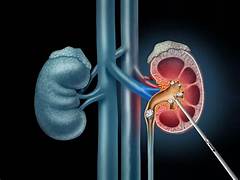

Percutaneous nephrolithotomy/nephrolithotripsy or PCNL is a minimally invasive procedure to remove significantly large stones present in the kidneys or the upper ureter. Book an appointment with the best piles surgeons in Chennai.


Free Pickup

No-Cost EMI

Support in Insurance Claim

1-day Hospitalization


ARUL RADHAKRISHNAN
“best experience at pristyn care ”
 Date: 06-11-24
Ebenezer P
“good”
Date: 24-10-24

wilson
“Good prolite patience Over 👍👍”
Date: 24-03-25
ARUL RADHAKRISHNAN
“best experience at pristyn care ”
Date: 06-11-24
Ebenezer P
“good”
Date: 24-10-24
wilson
“Good prolite patience Over 👍👍”
Date: 24-03-25
Percutaneous nephrolithotomy/nephrolithotripsy or PCNL is a minimally invasive procedure to remove significantly large stones present in the kidneys or the upper ureter. PCNL involves a tiny incision in the flank area that allows the surgeon to remove or break the stones into smaller pieces with almost zero complications. PCNL is an effective procedure when the stone size is too large to be treated with other treatment methods. Moreover, the procedure offers an excellent stone-free rate with minimal complications for the diameter of stones greater than 2cm, thus, replacing the need for open surgery. Get in touch with us to know more about PCNL surgery in Chennai.
Who can benefit from PCNL Surgery?
PCNL Surgery is an excellent treatment procedure for patients with large kidney stones (greater than 15mm), which are otherwise difficult to treat using ureteroscopy or lithotripsy procedures. Patients with a history of recurrent kidney stones also benefit immensely from the surgery. Moreover, in the case of multiple stones in the kidneys, or upper ureter that may cause urinary retention, PCNL is considered the optimum treatment procedure.
Diagnostic Tests
Several diagnostic tests done before the PCNL treatment include the following –
Procedure
During the procedure, the patient is first administered with general anesthesia. This helps the surgeon perform PCNL with greater precision. The surgeon then makes a tiny incision of around 1cm in the flank area (lower back). The surgeon inserts a thin, flexible scope called a nephroscope through the incision under x-ray guidance to visualize the stones and determine their precise location. Next, a thin needle may be used to access the urine collecting system of the kidney to carefully dilate the route. This is achieved using a guidewire that allows the nephroscope to safely access the part of the kidneys.
Once the stones are located, the surgeon may choose to either break the stone into smaller pieces or remove it in its intact form using microforceps. In some cases, DJ stenting may be required that allows the stone pieces to flush out through urine. Ureteral stents are thin, hollow tubes that are inserted through the urethral opening to reach the kidneys. They may be kept for about 10-14 days, depending on how long it may take for stones to completely flush out of the body.
Transform your health, transform your life. With Neuhealth Care, experience personalized medical travel that combines expert care, seamless planning, and unparalleled support – for a journey thats nothing short of life-changing.
No.A4, Chandrasekaran Avenue, 1st Main Road, Thoraipakkam, Chennai 600097
+91 842-842-2526
enquiries@neuhealthcare.in
© NeuHealthcare.in. All Rights Reserved by NeuHealth Care.
Designed by NeuHealth Care
 Chennai
 Hyderabad
 Bengaluru
 Mumbai
 Pune
Pune
 Delhi NCR
 English
 తెలుగు
 தமிழ்
தமிழ் ಕನ್ನಡ
ಕನ್ನಡ বাংলা
বাংলা मराठी
मराठी हिन्दी
 21 Years Experience