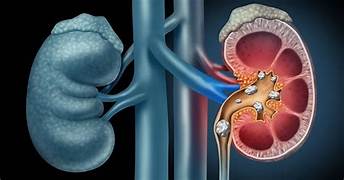

Retrograde intrarenal surgery or RIRS is an advanced procedure to remove kidney stones as large as 14mm. The surgery can help treat stones that are stuck in the kidneys (upper calyx, middle calyx, and lower calyx), ureter, or urinary bladder without Book an appointment with the best piles surgeons in Chennai.


Free Pickup

No-Cost EMI

Support in Insurance Claim

1-day Hospitalization


ARUL RADHAKRISHNAN
“best experience at pristyn care ”
 Date: 06-11-24
Ebenezer P
“good”
Date: 24-10-24

wilson
“Good prolite patience Over 👍👍”
Date: 24-03-25
ARUL RADHAKRISHNAN
“best experience at pristyn care ”
Date: 06-11-24
Ebenezer P
“good”
Date: 24-10-24
wilson
“Good prolite patience Over 👍👍”
Date: 24-03-25
Who can benefit from RIRS Surgery?
RIRS is an effective procedure for patients with a history of recurring stones or when the stone size is too large to pass naturally. RIRS can provide relief from pain for stubborn stones that are usually immune to medications like diuretics. The surgery is performed inside the kidneys or ureter without the need for external cuts or incisions. RIRS surgery is likely to benefit patients with the following conditions -
Diagnostic Tests
Several diagnostic tests done before the RIRS treatment include the following –
Procedure
After the diagnosis, the patient is scheduled for a day for the surgery. Refer to our READ MORE section to know about surgery preparation. Before the surgery, the patient is administered spinal or general anesthesia. Spinal anesthesia sedates the lower half of the body. General anesthesia makes the patients unconscious (they will be asleep during the entire procedure). The choice of anesthesia is usually based on the preference of the patient.
After the anesthesia is given, the urologist inserts a long, flexible tube called an endoscope into the urethral passage to the ureter to reach the urine-collecting part of the kidneys. The surgeon simultaneously also leverages x-rays and image screening to generate live images of the kidneys on an external screen for extreme precision. The endoscope is moved up in retrograde towards the kidneys. Once the stones are located through the endoscope, the surgeon uses a laser probe to crush or manipulate the kidney stones accordingly. Then the stones are removed using small forceps in their intact form. We use an advanced holmium laser to target stubborn stones and break them without damaging the surrounding organs. The stone fragments are then subsequently collected or caught in the stone basket. Once the surgeon makes sure all the stone fragments are collected, the basket is removed.
The surgeon usually inserts double J stents to expand the ureteral passage. The stent is a flexible, hollow tube that runs from the kidneys to the ureter. The stent may be kept in the kidneys for as long as it takes for stones to flush out of the body completely. Usually, it is 10 to 14 days under normal circumstances. The objective of the stent is to enlarge the ureteral passage to help flush out stone fragments from the body smoothly. Further, the viability of the RIRS procedure has been upgraded by the progression and advancements in related tools and equipment like wires, ureteral access sheath, and stone containers.
Transform your health, transform your life. With Neuhealth Care, experience personalized medical travel that combines expert care, seamless planning, and unparalleled support – for a journey thats nothing short of life-changing.
No.A4, Chandrasekaran Avenue, 1st Main Road, Thoraipakkam, Chennai 600097
+91 842-842-2526
enquiries@neuhealthcare.in
© NeuHealthcare.in. All Rights Reserved by NeuHealth Care.
Designed by NeuHealth Care
 Chennai
 Hyderabad
 Bengaluru
 Mumbai
 Pune
Pune
 Delhi NCR
 English
 తెలుగు
 தமிழ்
தமிழ் ಕನ್ನಡ
ಕನ್ನಡ বাংলা
বাংলা मराठी
मराठी हिन्दी
 21 Years Experience