
No.A4, Chandrasekaran Avenue, 1st Main Road, Thoraipakkam, Chennai 600097 Mon-Sun 09am - 5pm
4.5 golden star
Ratings
3 Million+
Happy Patients
200+
Hospitals
30+
Cities
USFDA-Approved Procedure

Free Pickup

Support in Insurance Claim

No-Cost EMI

No-Cost EMI

Support in Insurance Claim

1-day Hospitalization
1-day Hospitalization

Best Doctors for Piles Treatment in Chennai

doctor-image
Dr. M. Senthil Kumar

MBBS, MS - General Surgery

medikit icon 21 Years Experience

  4.9/5   Available

  No 16 & 50, Block Z, River View Colony, Chennai

Proctology Urology Vascular
Dr. M. Senthil Kumar is an expert and experienced General Surgeon, Proctologist, and Laparoscopic Surgeon with an experience of 18 years, and specialzies in Urology, Proctology, Laparoscopy, and Vascular. He graduated and obtained his MBBS degree from PSGIMR Coimbatore in 2004, and then his postgraduate MS degree from PSGIMR Coimbatore in 2014.Currently, he is practicing at Pristyn Care Clinic in Chennai. He is fluent in English,Hindi and provides compassionate care for all his patients to ensure complete recovery. He has been commended by his patients for his caring nature, hard working attitude, and willingness to be there for them - any time of day and night.He provides treatment for the following - Piles, Fissure, Fistula, Abscess,Pilonidal Sinus, Anal Polyps, Anal Warts, Rectal Prolapse, Toenail, Vascular, Varicose Veins,Thrombosis, Dvt, Diabetic Foot Ulcer, Foot Ulcer, Varicocele, Umbilical Hernia, Inguinal Hernia, Incisional Hernia, Hiatus, Gallstones, Stent Removal, Cyst Removal, Hydrocele, Urethral Stricture, Erectile Dysfunction, Urinary Tract Infection, Urinary Incontinence, Balnitis, Phimosis, Paraphimosis. He is registered in the Indian Medical Registry with the license number 74123. He strives to provide advanced medical care in a comfortable and holistic environment for all patients coming to him for treatment.
Read more

ARUL RADHAKRISHNAN

“best experience at pristyn care ”

calender icon   Date: 06-11-24

Ebenezer P

“good”

calender icon   Date: 24-10-24

doctor-image
Dr. Prabhakar Padmanabhan

MBBS, MS - General Surgery

medikit icon 15 Years Experience

  5.0/5

Proctology Urology Laparoscopy
Dr. Prabhakar Padmanabhan is an expert and experienced General Surgeon with over 14 years of experience. He completed his MBBS from Kursk State Medical University, Russia, in 2010, followed by an MS in General Surgery from Meenakshi University, Kanchipuram, in 2015. He further enhanced his expertise by obtaining a Fellowship in Minimal Access Surgery (FMAS) from the World Laparoscopic Hospital, Delhi, in 2016, and a Fellowship in Gastrointestinal Endo Surgery (FIAGES) in 2019. He is registered with the Tamil Nadu Medical Council. Throughout his career, Dr. Padmanabhan has held several significant positions. He served as an Assistant Professor at Meenakshi Medical College, Kanchipuram, from 2015 to 2016, where he delivered lectures and practical training in general surgery to medical students and assisted in surgical operations, focusing on skill development and the application of minimal access surgery. Since 2016, he has been a Senior Assistant Professor in the Department of General Surgery at Rajiv Gandhi Government General Hospital, Chennai. In this role, he leads and teaches advanced surgical techniques and methodologies to medical students and residents, conducts and supervises complex surgical procedures with a focus on laparoscopic and minimally invasive techniques, and contributes to departmental research and clinical trials to advance surgical practices and patient care. Dr. Padmanabhan is proficient in a wide range of surgical procedures, including advanced laparoscopic surgery, minimal access surgery, gastrointestinal endo surgery, and laser proctology. He has been recognized for his contributions to surgical education and training, as well as his involvement in clinical research and trials. Known for his dedication to patient care, Dr. Padmanabhan strives to provide advanced medical services in a compassionate and holistic environment.
Read more

wilson

“Good prolite patience Over 👍👍”

calender icon   Date: 24-03-25

doctor-image
Dr. M. Senthil Kumar

MBBS, MS - General Surgery

medikit icon 21 Years Experience

  4.9/5

Proctology Urology Vascular
Dr. M. Senthil Kumar is an expert and experienced General Surgeon, Proctologist, and Laparoscopic Surgeon with an experience of 18 years, and specialzies in Urology, Proctology, Laparoscopy, and Vascular. He graduated and obtained his MBBS degree from PSGIMR Coimbatore in 2004, and then his postgraduate MS degree from PSGIMR Coimbatore in 2014.Currently, he is practicing at Pristyn Care Clinic in Chennai. He is fluent in English,Hindi and provides compassionate care for all his patients to ensure complete recovery. He has been commended by his patients for his caring nature, hard working attitude, and willingness to be there for them - any time of day and night.He provides treatment for the following - Piles, Fissure, Fistula, Abscess,Pilonidal Sinus, Anal Polyps, Anal Warts, Rectal Prolapse, Toenail, Vascular, Varicose Veins,Thrombosis, Dvt, Diabetic Foot Ulcer, Foot Ulcer, Varicocele, Umbilical Hernia, Inguinal Hernia, Incisional Hernia, Hiatus, Gallstones, Stent Removal, Cyst Removal, Hydrocele, Urethral Stricture, Erectile Dysfunction, Urinary Tract Infection, Urinary Incontinence, Balnitis, Phimosis, Paraphimosis. He is registered in the Indian Medical Registry with the license number 74123. He strives to provide advanced medical care in a comfortable and holistic environment for all patients coming to him for treatment.
Read more

ARUL RADHAKRISHNAN

“best experience at pristyn care ”

calender icon   Date: 06-11-24

Ebenezer P

“good”

calender icon   Date: 24-10-24

doctor-image
Dr. Prabhakar Padmanabhan

MBBS, MS - General Surgery

medikit icon 15 Years Experience

  5.0/5

Proctology Urology Laparoscopy
Dr. Prabhakar Padmanabhan is an expert and experienced General Surgeon with over 14 years of experience. He completed his MBBS from Kursk State Medical University, Russia, in 2010, followed by an MS in General Surgery from Meenakshi University, Kanchipuram, in 2015. He further enhanced his expertise by obtaining a Fellowship in Minimal Access Surgery (FMAS) from the World Laparoscopic Hospital, Delhi, in 2016, and a Fellowship in Gastrointestinal Endo Surgery (FIAGES) in 2019. He is registered with the Tamil Nadu Medical Council. Throughout his career, Dr. Padmanabhan has held several significant positions. He served as an Assistant Professor at Meenakshi Medical College, Kanchipuram, from 2015 to 2016, where he delivered lectures and practical training in general surgery to medical students and assisted in surgical operations, focusing on skill development and the application of minimal access surgery. Since 2016, he has been a Senior Assistant Professor in the Department of General Surgery at Rajiv Gandhi Government General Hospital, Chennai. In this role, he leads and teaches advanced surgical techniques and methodologies to medical students and residents, conducts and supervises complex surgical procedures with a focus on laparoscopic and minimally invasive techniques, and contributes to departmental research and clinical trials to advance surgical practices and patient care. Dr. Padmanabhan is proficient in a wide range of surgical procedures, including advanced laparoscopic surgery, minimal access surgery, gastrointestinal endo surgery, and laser proctology. He has been recognized for his contributions to surgical education and training, as well as his involvement in clinical research and trials. Known for his dedication to patient care, Dr. Padmanabhan strives to provide advanced medical services in a compassionate and holistic environment.
Read more

wilson

“Good prolite patience Over 👍👍”

calender icon   Date: 24-03-25

A hernia occurs when the internal organs, tissues, muscles, or fat pushes through a weak spot in the abdominal muscle wall. Most hernias develop within the abdominal cavity, i.e., between the chest and hips. Hernias usually are not considered dangerous, but they tend to get bigger and lead to life-threatening complications.

It can occur in both males and females. Some common types of hernias are:

  • Inguinal Hernia: It is the most common type of hernia that appears in the groin region when a part or section of the intestine or bladder pushes through the abdominal wall or into the inguinal canal. This type of hernia mostly occurs in males.
  • Umbilical Hernia: In this type of hernia, the intestine protrudes through the weak abdominal muscles around the navel or belly button. It mostly develops in infants and often resolves within a year or so. Adult males and females can also develop this hernia.
  • Hiatal Hernia: A hiatal hernia develops when the opening in the diaphragm, where the esophagus passes through, widens, and the stomach pushes through this opening, creating a bulge in the chest.
  • Femoral Hernia: This type of hernia occurs when the internal organs or tissues push through the groin around the femoral artery present in the upper thigh region. A femoral hernia most develops in females.
  • Incisional Hernia: Also known as ventral hernia, an incisional hernia develops in the area of a previous surgical incision where the intestine or other organs push through the weak scar tissue in the abdominal wall.

Other types of hernia include epigastric hernia, spigelian hernia, congenital diaphragmatic hernia, perineal hernia, etc. Hernias often cause discomfort, pain, and a visible bulge in the affected area. They can be left untreated initially but need to be monitored properly. However, if the condition progresses, surgical hernia repair is required to prevent complications and alleviate symptoms.

Overview

Types of Hernia Surgery
  • Open Surgery

    • A single incision is made over the hernia site. The sac is reduced and the muscle wall is reinforced with sutures and often mesh 

    • Advantages: Can be done under local anesthesia, suitable for larger or complicated hernias 

    • Disadvantages: Larger scar, more postoperative pain, and slightly longer recovery 

  • Laparoscopic Surgery

    • Performed through small keyhole incisions using a camera and instruments; mesh is placed internally 

    • Benefits: Less pain, quicker recovery (often 1–2 weeks), lower infection risk, and better cosmesis 

    • Cons: Requires general anesthesia and skilled surgeons; slightly higher risk of internal injury in inexperienced hands 

  • Robotic-Assisted Surgery

    • A more advanced form of laparoscopy using robotic arms (e.g., da Vinci system) 

    • Benefits: Enhanced precision (3D vision, tremor filtering), lower chronic pain rates, excellent mesh placement, and quicker recovery for complex cases 

    • Cons: Higher cost and longer operating time

Why Surgery is Important
  • Hernias will not heal on their own, and may enlarge or cause serious complications like incarceration or strangulation—a surgical emergency 

  • Repair alleviates symptoms (pain, discomfort, bulge), prevents complications, and significantly improves quality of life

What to Expect

Preparation

  • Preoperative evaluation, imaging, medication review, and fasting are required .

Recovery

  • Open repair: 4–6 weeks for full recovery, with light activity in a week 

  • Laparoscopic/robotic: Return to most activities in 1–2 weeks; full recovery slightly faster 

  • Most patients can drive and desk-work again within a couple of weeks 

Risks

  • Possible complications include: infection, seroma/hematoma, organ/blood vessel injury, mesh issues, chronic groin pain (10–20%) 

  • Recurrence is low (<10% at 10 years); surgical method and surgeon experience influence the rate

What Happens During Hernia Operation?

The steps of hernia operation vary depending on the type of hernia and the approach used for repair. The choice of technique is usually dictated by the type of hernia, its size, and location. In general, there can be several risks with both conventional open surgery as well as the modern laparoscopic approach. So, unless there are some underlying factors at play, the following techniques of surgery are likely preferred-

  • Femoral hernia – Open Surgery
  • Inguinal hernia – Laparoscopic or Open
  • Umbilical hernia – Open
  • Ventral / Incisional hernia – Laparoscopic
  • Hiatal hernia- Laparoscopic

In case a hernia is large and has been bothering the patient for a long time, the open procedure may be preferred over the laparoscopic technique.

In general, a hernia operation is carried out in the following steps:

  • Before taking the patient to the operating room (OR), they are asked to sign a consent form. The patient is prepped for the surgery, which includes changing into a hospital gown and having an IV line inserted (mostly in the arm) for fluids and medications.
  • An anesthetist will administer anesthesia carefully, which will put the patient to sleep. The right type of anesthesia is determined based on the patient’s medical history. In most cases, general anesthesia is used.
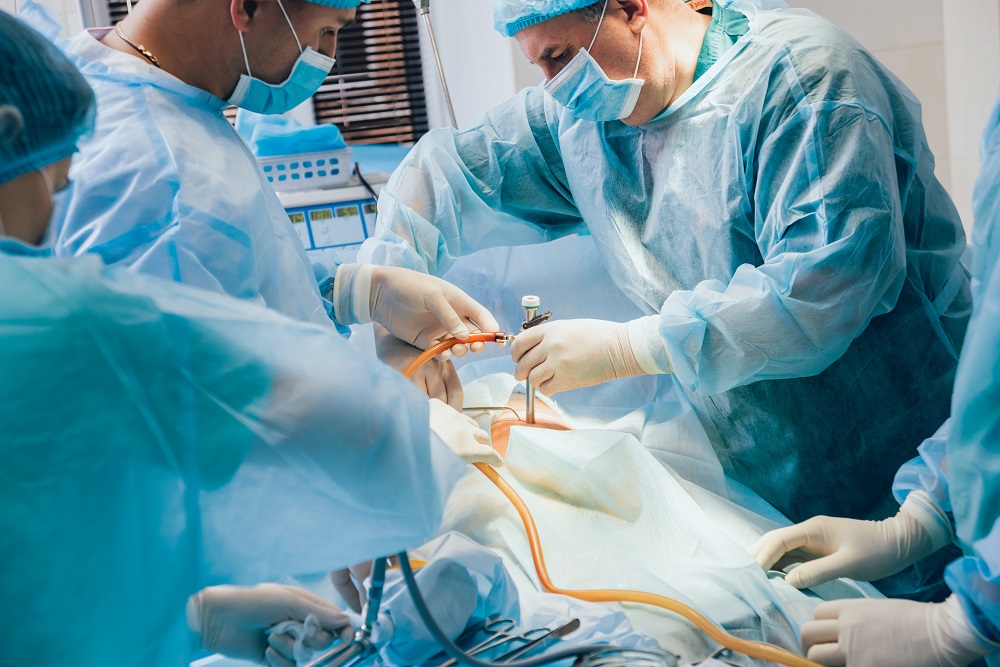
  • Once the patient is unconscious and numb, the surgeon will make the required number of incisions near the hernia site, depending on the technique chosen. In open hernia repair, a single large incision is made. In laparoscopic hernia repair, 2-4 small incisions are made to insert the surgical instruments and laparoscope (camera). In laparoscopic and robotic repair, carbon dioxide gas is used to inflate the abdominal cavity to create ample space for the surgeon to work.
  • The surgeon will gently push the protruding tissue or organ back into its proper position within the abdominal cavity.
  • A synthetic mesh may be used for the surgery. This hernia mesh acts as a reinforcement for the weakened area. The mesh is either placed over the hernia defect from the outside (called an onlay) or positioned beneath the defect or perforation in the abdominal wall and surrounding muscles (called sublay or preperitoneal). The mesh is secured with sutures, staples, or tissue glue as suitable.
  • Once the repair is done, the incisions are closed with absorbable sutures, adhesives, or surgical tape. In case of open surgery, standard staples or sutures will be used to close the incisions. The incision site will also be covered with gauze or bandages.
  • The patient will then be transferred to the recovery area, where the nurses will monitor his/her vital signs until the effects of anesthesia wear off.

The entire procedure takes around 40 to 60 minutes. If open hernia repair is done, the patient will need to stay in the hospital for 1-2 days. In the case of laparoscopic and robotic repair, the patient can be discharged on the same day after surgery.

What to Expect After Laparoscopic hernia surgery?

Immediately after hernia surgery, the patient can expect to experience a combination of effects from the anesthesia, surgery, and the body’s response to the procedure. 

Some general things that can be expected on the day of surgery include the following: 

  • The patient will feel disoriented due to the effects of anesthesia even after it wears off. There will be drowsiness, grogginess, confusion, and nausea temporarily. 
  • There will be significant pain and discomfort in and around the surgical site. Pain medications will be given to the patient through the IV line. The severity of pain will vary based on the surgical approach and the patient’s pain tolerance. 
  • In some cases, the patient can expect to find drainage tubes in the treated area, which are used to allow drainage of excess fluid in the surgical site. The drains will be removed within 1-2 days. 

After ensuring that the patient’s vitals are stable, the Surgeon will give permission to discharge. Before sending the patient home, detailed post-op wound care instructions, diet tips, precautionary tips, and a follow-up schedule are provided to the patient. The post-op experience of each patient will be different depending on the complexity of their specific case. 

Is Hernia Surgery Covered Under Insurance?

Hernia surgery is covered under insurance, but the coverage can vary depending on the type of insurance plan owned by the patient and the specific terms and conditions outlined in the policy. 

Though Laparoscopic hernia surgery is medically necessary, the insurance plans usually state the following regarding coverage- 

  • If the hernia is not causing any problematic symptoms and the patient is opting for surgery, the Laparoscopic hernia surgery will be considered an elective cosmetic procedure. Due to this, the insurance company will not provide coverage for asymptomatic hernias. 
  • If the hernia is symptomatic and causing difficulty in regular life, the insurance company will cover the cost of Laparoscopic hernia surgery entirely or partly as specified by the policy. In symptomatic cases, the patient also needs to provide clinical evidence clearly stating the symptoms experienced by the patient and demonstrating since when the problem has been evident. Once these documents are submitted, the insurance company will provide authorization to claim the insurance through cashless (in network hospitals) or reimbursement (in non-network hospitals). 

It’s important that the patient talks to the health insurance agent to clearly understand the specified terms and conditions to find out if the policy has clauses like deductibles, co-payment, etc., and what amount of the sum insured can be claimed for hernia surgery. Clearly understanding the coverage will help the patient to make a well-informed decision.

Non-Surgical Hernia Treatment Options

Non-surgical methods to treat hernias primarily focus on managing the symptoms and reducing the discomfort. However, it should be noted that these management options cannot repair the hernia and surgery is the only effective treatment method for hernia repair. 

Some general non-surgical options may include the following:

  • Watchful Waiting: It is the initial approach for hernia management, especially in elderly and frail patients. This approach involves regular monitoring of the symptoms to ensure the hernia doesn’t become larger or more problematic. 
  • Dietary Modifications: Certain dietary changes can be very helpful in managing the symptoms associated with hernias, particularly hiatal hernias. These modifications include avoiding large meals, spicy foods, acidic foods, and carbonated beverages. 
  • Medications: Several over-the-counter and prescription medications can help to alleviate the symptoms of hernias. Such medicines include antacids, proton pump inhibitors, H2 blockers, etc. 
  • Support Garments or Hernia Truss: In asymptomatic cases, the patients may be advised to use a hernia truss or support garment to keep the organ in place. However, it is only a temporary solution and doesn’t treat the underlying condition. 
  • Physical Therapy: In certain cases, physical therapy might be recommended to promote self-healing of the abdominal muscles to reduce herniation and provide relief. However, the effectiveness of this method is unproven. 

It should be noted that these non-surgical methods are not a substitute for surgery, and they may not help prevent the progression of the hernia. Therefore, it’ll be best to consult an expert and determine whether surgical intervention is necessary. 

Laparoscopic Hernia Surgery Complications & Side Effects

Hernia surgery is usually safe and effective. But like any other surgical procedure, it carries potential risks and complications. The surgeon usually takes the necessary measures to reduce the risks and complications. However, in emergency cases, it may not be possible to mitigate them all. 

Some potential complications and side effects of hernia operation include the following:

  • Infection: An infection may occur at the surgical site due to poor hygiene or wound care. Signs of infections include increased pain, redness, swelling, warmth, and discharge from the incisions. If any of these symptoms present, it’s advised to contact the Surgeon promptly. 
  • Bleeding: While bleeding is normal after surgery, in some cases, the patient may experience excessive bleeding during or after the surgery. 
  • Hematoma & Seroma: Blood accumulation and fluid accumulations are often after surgical procedures. In some cases, they resolve on their own. But in others, drainage may be required to prevent further complications. 
  • Mesh-related Complications: In some cases, the patient may experience an allergic reaction to the mesh or issues like mesh migration, mesh shrinkage, or adherence to nearby tissues. If such complications arise, the Surgeon may have to remove the mesh. 
  • Recurrence: Despite successful repair, hernias can sometimes recur, especially if the mesh is not placed for scaffolding. Along with this, Laparoscopic hernia surgery also makes the patient vulnerable to incisional hernia. 

Besides all these, there are several other complications, such as adhesion formation due to abnormal healing, chronic pain in the surgical site, wound dehiscence, anesthesia reactions, etc., that may occur after hernia surgery. To prevent these risks, complications, and side effects of anesthesia, the patient needs to follow the pre and post-op instructions strictly for a smooth and successful Laparoscopic Hernia Surgery Recovery Time.

Laparoscopic Hernia Surgery Recovery Time

The Laparoscopic Hernia Surgery Recovery Time is approximately 3 to 6 weeks. The exact duration for each patient will vary depending on their healing abilities, type of surgery, and whether the patient complies with the post-surgery care instructions. 

If the patient has open hernia surgery, the Hernia Surgery Recovery Time will be around 4 to 6 weeks. But with laparoscopic hernia surgery, recovery time will be 3 to 4 weeks. The general recovery timeline will be as follows: 

  • On the Day of Surgery: The patient will spend the first few hours after surgery in the recovery room and will experience pain and discomfort, which will be managed through pain medications. Once the effects of anesthesia wear off, the patient will be allowed to drink clear fluids and progress to a regular diet as tolerated. Depending on the type of surgery, the patient may get discharged on the same day or require overnight hospitalization. 
  • In the First Week: Pain and discomfort will gradually improve, but the patient will likely need to continue taking pain medications as prescribed. The Surgeon will advise you to take it easy, avoid heavy lifting, and rest properly to allow the body to heal. The patient will have to keep the incision area clean to prevent infections. 
  • In 2-3 Weeks: In case of laparoscopic hernia operation, the patient will be able to resume most activities and can even go back to work within 2-3 weeks. However, with open surgery, the patient will only be allowed to return to normal activities, such as walking or gentle stretching. He/she will have to continue monitoring the incisions and avoid bathing in tubs, swimming, and strenuous activities. 
  • In 3-6 Weeks: Most people can resume normal activities within three to six weeks. Patients can resume school or work, given that the job doesn’t involve heavy lifting or strenuous activities. The Surgeon will guide the patient about when it’s safe to resume strenuous exercises and activities. 

After 6 weeks and beyond, patients are usually able to resume most activities, including exercises and heavy lifting. The incision will be well-healed, but there will be minor discomfort and tightness in the scar. At this time, the Surgeon may recommend using scar reduction cream to improve the skin’s appearance. It’s important to listen to the body and gradually increase physical activity to avoid overexertion. Follow the surgeon’s instructions and report if any sign of infection or complications appears.

Lifestyle Changes Recommended After Laparoscopic hernia surgery

Hernia patients should understand that after Laparoscopic hernia surgery, they will have to make certain lifestyle changes to contribute to their recovery and prevent complications and recurrence. Individuals will have to take several precautions after hernia surgery for a smooth and successful recovery and follow the tips below:

  • For a certain period after hernia surgery (usually 3-4 weeks at least), avoid lifting heavy objects or exercising, as such activities can put undue pressure or strain on the surgical site. The patient is also advised to be very careful lifting heavy objects in the future too, as the integrity of the abdominal muscle wall is already compromised. 
  • Instead of pushing the body to perform activities, even walking or climbing stairs, allow the body to heal at its own pace and gradually resume activities. If it hurts performing any activity, stop immediately. Pushing the body to its limit during the recovery period can lead to complications, such as tearing of stitches, mesh displacement, etc. 
  • Though it is a general recommendation, the patient should primarily focus on taking a balanced diet after hernia surgery, which is rich in protein, fiber, vitamins, and minerals to support the healing process. It’s also important to avoid foods that can cause gas or bloating. Also, don’t forget to drink plenty of water throughout the day. It will help to flush out toxins from the body. 
  • In the long term, the patient will be advised to maintain a stable and healthy weight, as being overweight can increase the risk of developing hernias. 
  • Avoid straining during bowel movements as it can strain the abdominal area and increase the risk of damaging the repaired hernia. Try to relax or ask the surgeon to prescribe laxatives or stool softeners for easy bowel movements. 
  • Quit smoking for at least 4 to 6 weeks of recovery, as smoking can impair the healing process by making the blood vessels weak. It can also affect the body’s immune system negatively. 
  • After the recovery is complete, consult the Surgeon and include muscle strengthening exercises in the routine to improve overall health and prevent hernia recurrence. 
  • The patient needs to attend all scheduled follow-up consultations with the Surgeon to ensure proper healing, adjust medications, and address other concerns.

One thing to remember is that the recovery will be different for each patient. Therefore, it’ll be best to take personalized recommendations from the Surgeon for optimal healing.